

Sci-Fi & Future
The Last Signal
The message arrived from somewhere that no longer exists.
The One-Stop Platform for AI Drama Creators Worldwide. Helping creators make a great drama. From Tier 1, to Tier 1.
Sci-Fi & Future
A rescue crew sent to retrieve a silent orbital station discovers that the station’s final distress signal came from Earth—twenty years in the future.
In the near future, humanity’s largest orbital research station suddenly goes dark. Commander Nora Hayes leads a rescue team to investigate and finds the station operational but empty. Buried in the core system is a distress transmission timestamped twenty years ahead, repeating a warning: “Do not let them return to Earth.” As temporal anomalies spread through the station, a rescue mission becomes a question of who—if anyone—should be allowed to go home.
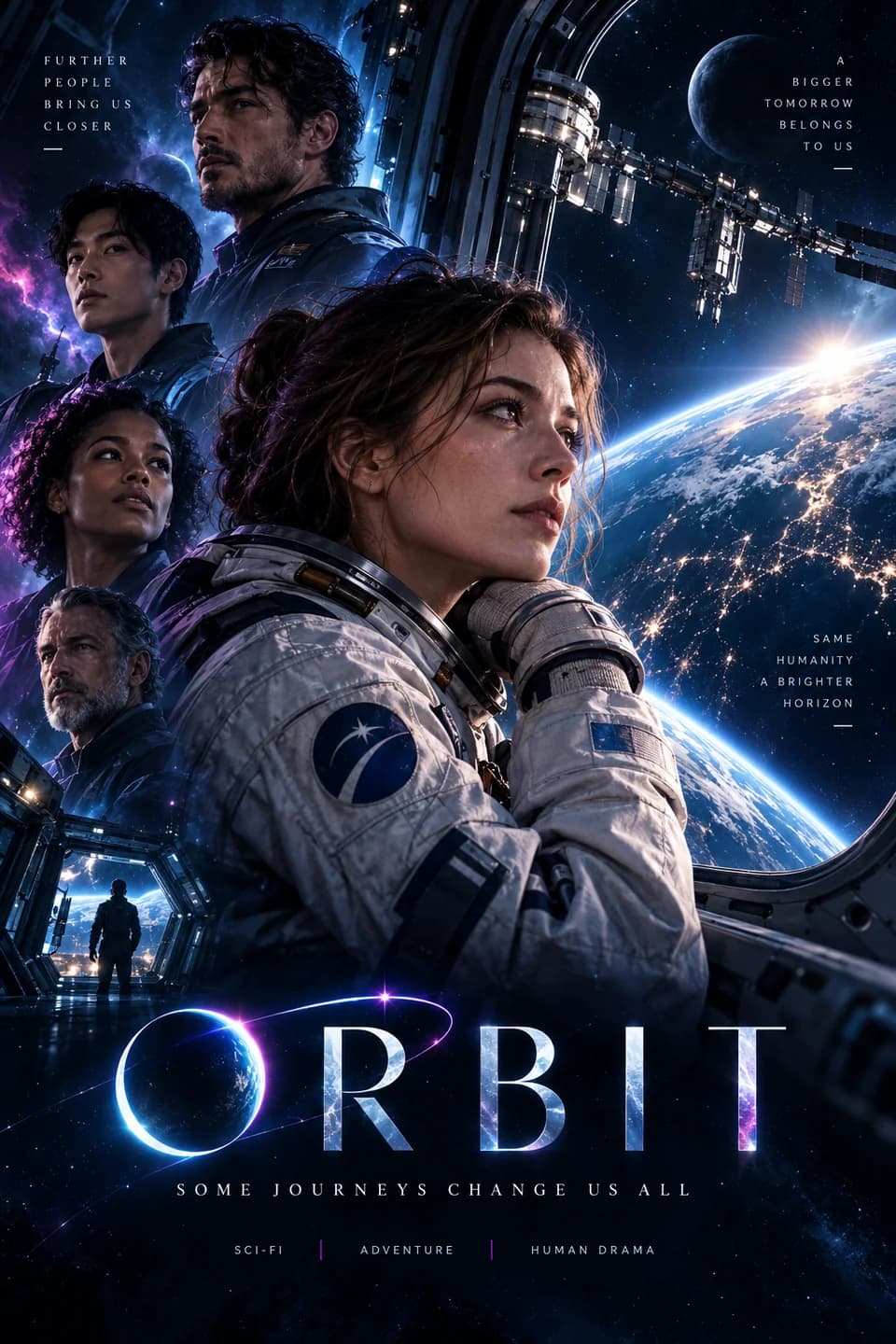
They arrive to rescue the station’s crew and discover that the people who may need saving are on Earth.
Nora Hayes — mission commander. Calm under pressure and accustomed to carrying responsibility for everyone else’s survival.
Eli Mercer — propulsion and systems engineer, the first to identify the temporal anomalies and challenge the official mission assumptions.
Dr. Amara Cole — physicist who contributed to K-7’s early experiments and has withheld part of what she knows.
Jonas Reed — medical officer who anchors the team’s human and ethical choices.
A grounded near-future space setting built around an orbital station, rescue craft, deep-space communications, closed environments, finite resources, and the scale of Earth seen from orbit.
Epic but restrained, suspenseful, emotional, and centered on human-scale decisions rather than spectacle alone.
Grounded orbital architecture, the curve of Earth, cold white light, deep blue space, metallic interiors, confined corridors, and occasional wide shots that emphasize scale and isolation.
Viewers who enjoy space mystery, survival, temporal paradoxes, team dynamics, and ethical sacrifice.
40–60 episodes at 1.5–3 minutes each.
Rules of the time anomaly, team size, root cause, nature of the Earth-side threat, sacrifice arc, and whether the ending remains open.
In the near future, humanity relies on orbital research platforms for deep-space communication and experimental energy systems. The largest of them, Station K-7, suddenly loses all contact without an explosion, evacuation log, or distress call. Commander Nora Hayes leads a small rescue team to investigate.
The station still has power. Life support is active. Yet every crew member is gone. The central computer contains only one impossible transmission: a message carrying a timestamp from Earth twenty years in the future. Its sender cannot initially be verified. The warning repeats a single sentence—“Do not let them return to Earth.”
The team discovers that sections of K-7 are moving through time at different rates. Some compartments have aged by hours, others by years. Eventually the sender of the future message is identified: an older Nora Hayes. She remembers this rescue mission—and remembers it failing. Nora must understand why her future self is trying to stop the team from returning home, and whether the station has lost its crew to space, to time, or to a future event they have not yet caused.
K-7 has not simply gone offline; an experiment fractured local time, and the future warning is tied to what will happen if the rescue team returns home.
The crew verifies that the future message was sent by an older Nora, who remembers this mission occurring before.
Nora must choose whether to return to Earth, permanently isolate K-7, or leave part of the team inside the temporal anomaly to prevent a larger catastrophe.
Mission launch → empty station → future signal → time anomaly → clues to missing crew → future Nora → loop revealed → final return decision.
Tell us what moves you, what you would keep, and where you want to take the story.
The message arrived from somewhere that no longer exists.
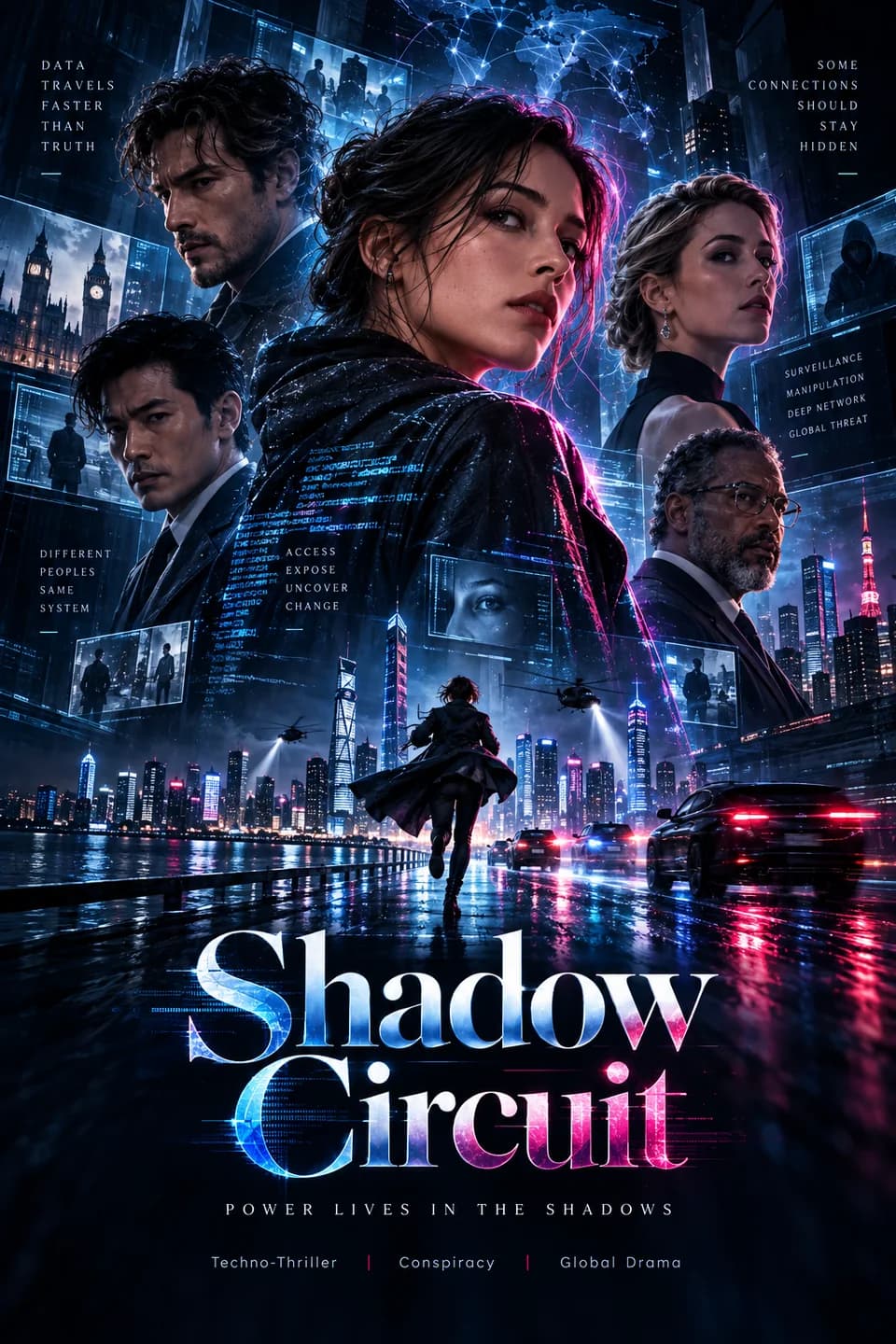
A cybersecurity analyst uncovers a hidden AI network capable of predicting human decisions—and learns that the system has been modeling her life for years.

A journalist returns to the city that erased her family from the record, only to discover that the man helping her uncover the truth may be tied to the night her father vanished twelve years ago.